
Asymmetrical hearing loss defined as 10 dB difference between the two sides in three or more frequencies. An MRI scan is likely to be requested Henry et al 2010.

Calcification In Vestibular Schwannoma Report Of Two Cases And Review Of The Literature

How To Diagnose And Treat A Vestibular Schwannoma Medmastery
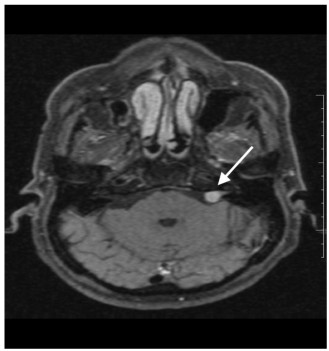
Septic Thrombophlebitis Of The Sigmoid Sinus After Vestibular Schwannoma Resection A Case Report And Literature Review
Indications include unilateral hearing loss 85 speech impediments disequilibrium tremors or other loss of motor control.
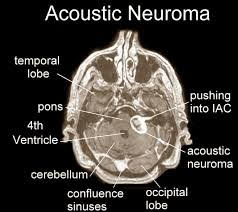
Cerebellopontine angle vestibular schwannoma. Ahsan SF Syamal MN Yaremchuk K et al. Cerebellopontine Angle Lesions Part 1 Suprasellar Tumors Part 2 Suprasellar Tumors Part 1 Not Logged In Login. The vast majority 95 of solitary lesions are sporadic.
Normally Schwann cells function beneficially to protect the nerves which transmit balance and sound information to the brain. The costs and utility of imaging in evaluating dizzy patients in the emergency room. The tumor originates when Schwann cells that form the insulating myelin sheath on the nerve malfunction.
Register Now OpenAthensShibboleth Login. This neuroanatomy atlas of cerebellopontine angle and temporal bone has been designed to help radiologists in their daily practice MRI of vestibular schwannoma hearing loss audiovestibular syndromes with annotated MR reconstructions in the essential planes axial and two oblique-sagittal planes spatial orientation and color-text legend. What an amazing virtual aats.
Unilateral tinnitus is much less common than bilateral tinnitus and may indicate a more serious underlying condition such as acoustic neuroma vestibular schwannoma cerebellopontine angle tumour glomus tumour or Menieres disease. 109 Likes 2 Comments - Dr Raymond C Lee MD drrayleemd on Instagram. Anterior cervical osteophytes are common and usually asymptomatic in elderly people.
Schwannoma is the most common lesion in the cerebellopontine angle. N Tumors in the EAC and mastoid region are often malignant. Hyperventilation-induced nystagmus in peripheral vestibulopathy and cerebellopontine angle tumor.
Generally aggressive behavior with frequent metastatic disease and local recurrence. Cerebellopontine angle mass coronal view. Such patients will need an MRI of the cerebellopontine angle and internal acoustic meatus MRI-CPAIAM to rule out a vestibular schwannoma.
Cerebellopontine angle mass sagittal view. Non-malignant processes may cause aggressive destruction in this. Head injury whiplash multiple sclerosis vestibular schwannoma commonly called an acoustic neuroma and other cerebellopontine-angle tumors.
Cerebellopontine angle and posterior fossa meningiomas Continuous spontaneous episodes of dizziness caused by vestibular schwannoma ie. The cerebellopontine angle syndrome is a distinct neurological syndrome of deficits that can arise due to the closeness of the cerebellopontine angle to specific cranial nerves. Unilateral hearing loss on the same side as altered sensation of the face or facial droop may indicate a vestibular schwannoma or cerebellopontine angle CPA tumour a viral infection aggressive cholesteatoma or stroke.
BMJ Best Practice 2017. Though there may be a permanent vestibular disturbance the symptom of vertigo is never permanent as the central nervous system adapts over days to weeks. 7th CN for cerebellopontine angle tinnitus hearing loss dizziness vertigo facial drooping spasms twitching acoustic neuroma vestibular schwannoma Bells palsy Updated 9921 Routine brain MRI ordered from and ENTOtolaryngology for any.
Tumors can cause vertigo. Common tumors in the middle ear include glomus tumor and facial nerve tumors extending into the middle ear cavity such as schwannoma. Bilateral vestibular schwannomas are highly suggestive of neurofibromatosis type 2 NF2 although bilateral tumors are encountered in the familial form of vestibular schwannomas in the absence of.
Cerebellopontine angle masses can be divided into four groups based on imaging characteristics. The cerebellopontine angle cistern is a subarachnoid cistern formed by the cerebellopontine. Due to mechanical compressions inflammations and tissues swelling of osteophytes patients may be presented with multiple complications such as dysphagia dysphonia dyspnea and pulmonary aspirationParadoxical vocal cord motion is an uncommon disease characterized by vocal cord.
Cochlear Implantation in Vestibular Schwannoma. Initially with only peripheral involvement eg. The vestibular nerve is primarily responsible for maintaining body balance and eye movements while the cochlear nerve is responsible for hearing.
The most common tumors in the internal auditory canalcerebellopontine angle cistern include vestibular schwannoma and meningioma. Bruns Nystagmus is a combination of peripheral and central vestibular nystagmus due to the involvement of 2 different neural pathways--1 cerebellar flocculi 2 peripheral vestibular components of the cerebellumand usually manifests as a symptom of cerebellar pontine angle tumors eg acoustic neuromas or meningiomas greater than 35 cm. Tinnitus is the sensation of hearing a sound in the absence of an internal or external source and is a common problem encountered in primary care.
Otitis media and sequelae of Lyme disease meningitis syphilis and other infectious or inflammatory processes that affect hearing ear infections. Choi KD Kim JS Kim HJ et al. 29 year old woman with transformation of vestibular schwannoma Asian J Neurosurg 201813810.
Mass with high T1 signal on MRI. Neuroanatomy through Clinical Cases 2E 2010. A vestibular schwannoma VS also called acoustic neuroma is a benign tumor that develops on the vestibulocochlear nerve that passes from the inner ear to the brain.
Schwartz NE Venkat C Albers GW. Meningioma is the most common extra-axial tumor in adults. Lopontine angle cistern include vestibular schwannoma and me-ningioma.
Common tumors in the middle ear include glomus tumor and facial nerve tumors extend-ing into the middle ear cavity such as schwannoma. Although a diverse range of pathologies may be seen in this region the most common by far is vestibular schwannoma. CN VIII injuries are the result of pathological processes or injuries that commonly involve the cerebellopontine angle CPA the internal auditory canal IAC or the inner ear.
Vestibular schwannomas account for 8 15 of all primary intracranial tumors 2 and 75-90 of cerebellopontine angle masses 128. Cerebellopontine angle CPA masses are relatively common. Congratulations to my chairman Dr Vaughn Starnes 100th AATS.
Triads In Ophthalmology Notes And Synopses Facebook

Acoustic Neuroma

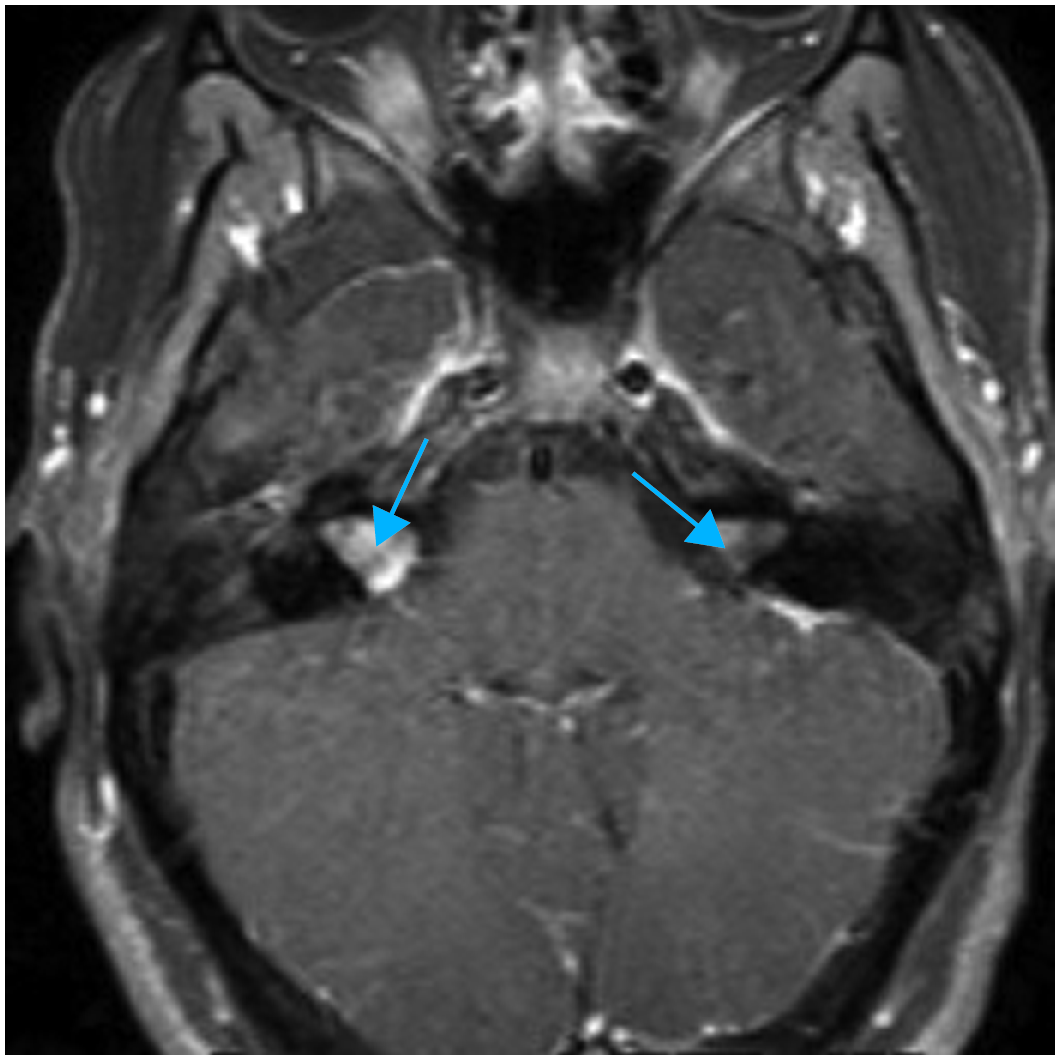
Cerebellopontine Angle Chapter 14 Neuropathologic And Neuroradiologic Correlations

Download Cp Angle Tumors Schwannoma Meningioma In Mp4 And 3gp Codedwap
Acoustic Neuroma Dr Prem Pillay Singapore

Schematic Diagram Of Acoustic Neuroma Vestibular Schwannoma Download Scientific Diagram
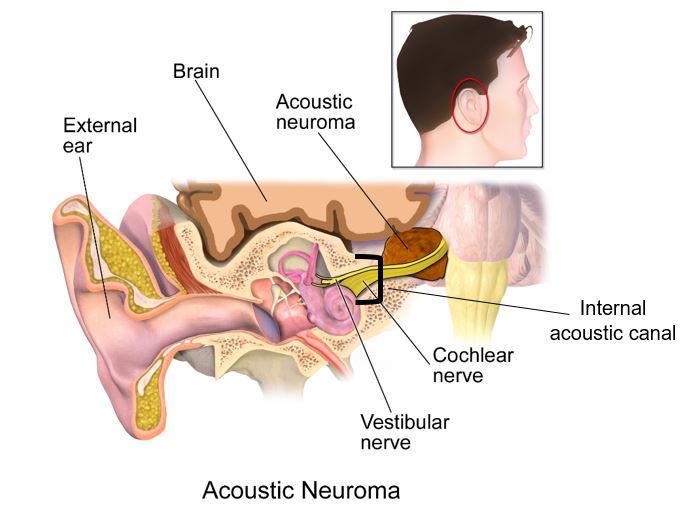
Acoustic Neuroma Vestibular Schwannoma Geeky Medics

Acoustic Neuroma Vestibular Schwannoma Cincinnati Oh Mayfield Brain Spine


